Certification Structure

Certification Structure
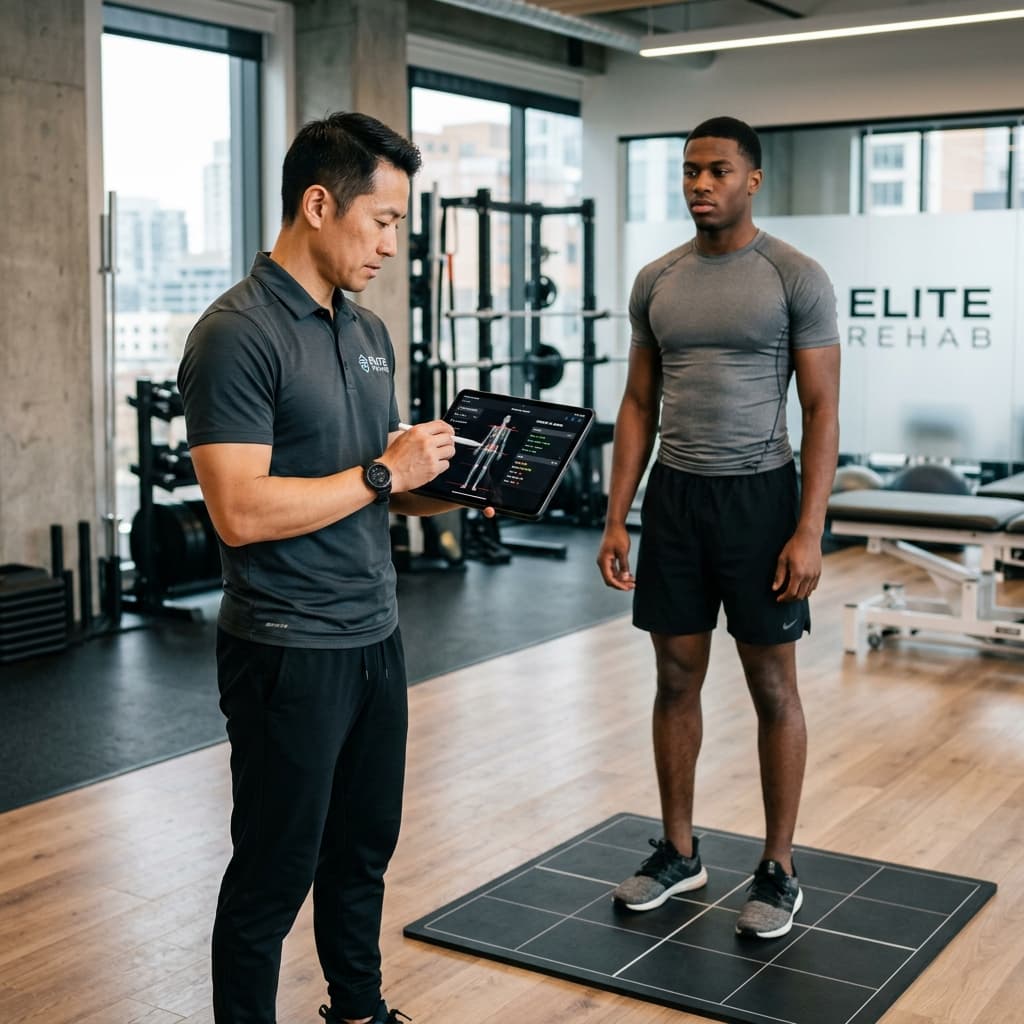
On-site practical certification exam for Sport Rehabilitators

An Objective, Systematic
Certification System

To produce qualified professionals with the expertise to support the nation's return to sport, KASRaT has established a systematic certification structure that reflects international standards, including those of BASRaT.

Certificate Title
Sport Rehabilitator
스포츠리해빌리테이터
Issuing Body
KASRaT
Korea Association of Sport Rehabilitators
Certificate Type
Registered Private Certification
KRIVET Registration No. 2025-000993
Administration Cycle
Annual
Held once a year

01Certification Process & Workflow

1
Step 1

Document Review

Confirm exam eligibility

  • · Graduation from an Association-accredited university department
  • · Completion of the Association's regular education program
Document Review Application
2
Step 2

Written Exam

Assess foundational knowledge

  • · Sport Basic Science
  • · Sport Participation Management
  • · Wellness Program Design
  • · Program Teaching Methods
Written/Practical Exam Application
3
Step 3

Practical Exam

Assess practical competency

  • · Community Health Practice
  • · Program Coaching Demonstration
Written/Practical Exam Application
4
Step 4

Certificate Issuance

Final successful candidates

  • · Certificate issuance application
  • · Registration as a Regular Member
  • · Participation in Continuing Professional Development (CPD)
Certificate Issuance Application

02Exam Eligibility Requirements

Exam Eligibility Checklist

Please confirm you meet the following requirements before submitting your application.

Major & Academic Requirements

Graduates (or expected graduates) of an Association-accredited university department, or completers of an accredited society's education program

Education Completion

Completion of all 6 areas of the Association-designated curriculum — Sport Basic Science · Sport Participation Management · Wellness Program Design · Program Teaching Methods · Community Health Practice · Program Coaching Demonstration

Failing to meet any of the above requirements may restrict your eligibility to sit the exam. For the list of recognized class-hour courses and approved practicum institutions, please refer to the [Certification Operating Regulations] in the Resources archive.

03Exam Subjects & Scoring Criteria

CategoryExam SubjectAssessment SummaryQuestions / TimePassing Criteria
Written Exam
(5-option multiple choice)
Sport Basic ScienceFundamental knowledge of the human body and exercise required for sport participation60 questions / 40 minutes
- At least 40 points per subject
- Average of at least 60 points
Sport Participation ManagementPrinciples of managing an individual's return to sport and pre-participation stages60 questions / 40 minutes
Wellness Program DesignDesign of individualized physical activity and wellness programs60 questions / 40 minutes
Program Teaching MethodsTailored exercise instruction and teaching methods for different populations60 questions / 40 minutes
Practical Exam
(SOAP-based)
Community Health PracticePractice of providing community sport and health management information and lifestyle education3 questions / 20 minutes- At least 60 points
Program Coaching DemonstrationDemonstration of individualized physical activity program instruction1 question / 20 minutes

04Certification Exam Blueprint & Subject Details

Review the detailed exam blueprint and assessment criteria for the 4 written and 2 practical subjects.

Select Evaluation Area

SPORT BASIC SCIENCE · Written · 60 Questions · 40 Minutes

Sport Basic Science

Assesses foundational scientific knowledge underlying sport rehabilitation, including body structure and function, physiological responses during exercise, and biomechanics.

KASRaT Curriculum Category

Anatomy

Foundational knowledge of the structure and function of the human skeletal, muscular, and nervous systems

Exercise Physiology

Knowledge of the body's physiological responses and energy metabolism during exercise

Sports Biomechanics

Kinesiological principles of human movement and the ability to conduct mechanical analysis

Key Exam Criteria (Learning Outcomes)

1Anatomical understanding of the human skeletal, muscular, and nervous systems
2Functional anatomical understanding of joint and muscle movement
3Understanding of the body's physiological responses during exercise (cardiorespiratory function, energy metabolism, muscle contraction)
4Analysis of the biomechanical (kinetic/kinematic) characteristics of sport movements
Study Guide
Exam Trend Guide
Building on an accurate understanding of core concepts and terminology, this evaluates problem-solving ability in applying that knowledge to real-world field situations in a balanced way.

Detailed Subject Descriptions by Exam Criteria

Anatomy

One of the core elements of sport rehabilitation is the accurate diagnosis and assessment of injury, and anatomical knowledge plays a critically important role in this process. First, understanding the anatomy of the injured area is essential for identifying the cause and extent of an injury. For example, in the case of a joint injury, accurate diagnosis is difficult without understanding the location and function of the muscles, bones, ligaments, and cartilage that make up that joint. This anatomical understanding also helps identify the causes of injury and prevent future injuries, since it is necessary for understanding which muscles a particular movement places excessive stress on and which joints are vulnerable to injury. Therefore, for a sport rehabilitation professional, anatomical knowledge is essential for the accurate diagnosis and assessment of injury and for establishing effective prevention strategies.

Exercise Physiology

Another important element in the field of sport rehabilitation is physiological understanding. Through physiology, the study of how the human body functions, a sport rehabilitation professional can grasp how injury affects the body's normal functioning and how the body responds to various therapeutic interventions. For example, when designing a rehabilitation program to help restore endurance and cardiovascular health after an injury, understanding the cardiovascular and respiratory systems is essential. Understanding musculoskeletal physiology is essential when creating strength and conditioning programs, and knowledge of the nervous system enables the design of motor control and balance exercises. Physiological knowledge can also help in understanding the healing process after injury: different tissues in the body heal at different rates and require different conditions for optimal recovery. Understanding these factors can help design more effective rehabilitation strategies and provide realistic expectations for recovery. Furthermore, understanding exercise physiology is critical for designing injury-prevention programs — by understanding how the body responds to various types of exercise, one can design training programs that minimize injury risk while maximizing performance.

Sports Biomechanics

Sports biomechanics is an essential foundational discipline within sport rehabilitation, grounded in kinesiology — the study of human movement. As students build kinesiological knowledge, they become able to analyze movement patterns and biomechanics and to reason about potential injury risk. They can also apply this knowledge to improve an individual's physical function and to develop customized exercise programs for injury recovery. This capacity for scientific reasoning enables students to logically explain how a specific physical activity affects various muscles and joints.

Korea Association of Sport Rehabilitators (KASRaT)